Below is an editorial I wrote for a class at the University of Tulsa:
Community colleges represent a burgeoning scion of higher education in the United States. According to a report in the Journal of Higher Education, the number of undergraduate students entering community colleges between the 2000 and 2008 school years increased by 1.1 million, and this number is only expected to increase over the next decade (Wang 851). Many educators question whether the caliber of these institutions ultimately contributes to student success. Studies sometimes implicate two-year schools of failing to adequately prepare their students for four-year institution workloads, but these assessments often fail to measure the integrational efficacy of four-year institutions for transferring students. Certainly, all educators should require students to perform to the highest standards; nevertheless, current measurements of student attainment should not solely impose a burden of proof–as to the legitimacy of academic rigor–upon two-year institutions, but should also investigate how well four-year institutions integrate transferring students.
Statistically, community college transfer students are graduating from four-year colleges at a lower rate than “native” college students (those who start and finish their degree programs from a single four-year institution) (Wang 852). However, there has also been a decrease in graduation and retention rates among traditional college students. New York Times education blogger Tamar Lewin recently cited an administrator from UCLA who reported “a significant mismatch among their [college students’] expectations and the reality that most students don’t graduate four years later from the institution where they started” (Lewin NYTimes blog). Thus, disillusionment of college students is not confined to transfer students, although research indicates that only 44% of students who begin their college education at a two-year institution complete a baccalaureate degree within six years, whereas nearly 63% of native four-year college students graduate within the same amount of time (Ishitani 404).
There are a number of studies that have attempted to explain this problem. Among the posited factors that cause transfer-student difficulties are: “transfer shock (drop in grades), transitional trauma (social adjustment to a new campus), academic trauma (academic adjustment to the more rigorous four-year campus), and, in some cases, transfer ecstasy (an increase in GPA)” (Tobolowsky and Cox 390). Additionally, transfer students are significantly harder to serve due to their “incredible diversity[,] and [their] frequent false assumptions about the institution” (Tobolowsky and Cox 396). Students who attend two-year community colleges are often underrepresented by traditional four-year institutions (Handel 7), thus, their economic, racial, and academic expectations are sometimes ill-predicated.
Another set of complexities is addressed by a 2011 official report by the College Board, which found that four-year institutions underestimate the financial stress of transferring students. This is exacerbated by the US government’s classification of students’ financial status. Although many transferring students have lived independently of their parents for several years, financial aid packages are minimized since the government expects financial contributions from the student’s family until he or she has reached the age of twenty-five (Handel 21). Four-year institutions then use this inflated income projection to calculate the student’s need. Usually, the final estimated need for transfer students is thus calculated to be less than that of incoming freshman (since housing, transportation to school, etc, are excluded from the transfer’s student’s financial aid package) (Handel 21).
For the stated reasons as well as many others, the academic success of transfer students from community colleges to programs at four-year institutions is more difficult to measure than the success of native college students. Four-year institutions should continue to research ways to integrate transfer students into their programs, taking into account the financial and administrative challenges that are likely reducing baccalaureate graduation rates among native and non-native college students. Also, educators at senior institutions must consider the transitional complexities of college transfer, abstaining from the stigmatization of junior institutions and community college alumni. The field of education is a complicated arena, and assessing individuals with alternative educational experiences must control for transitional errors.


 “It’s hell.”
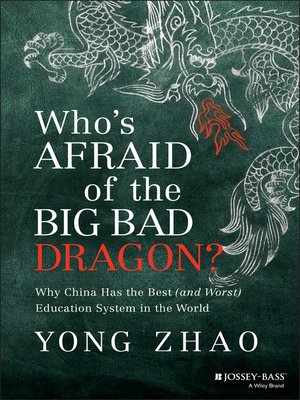 or in Western-style schools in China rather than keep them in “the world’s best education system.” Education has been widely recognized as the primary culprit for China’s lack of creative and innovative talent, and a major concern for China’s success in the future.

 Upon little investigation, I learned that the homeless population reported for KIPP is 1%, while MLK’s is 17.2%. KIPP’s special ed population is measured to be 5.6% of the school population, while MLK’s is measured at 14.4%. Additionally, MLK’s Gifted and Talented program makes up 1.5% of students, while KIPP’s program makes up 8.9% of students.

 During the KIPP presentation at the May 16th board meeting, Mr. Tracy McDaniel argued that expanding school choice fulfills social justice outcomes. When he cited Jonathan Kozol’s monolithic text,
